A single national maintenance calendar cannot fit every American home. September can mean hurricane preparation on the Gulf Coast, wildfire smoke in the West, early frost in the northern Rockies, or another month of air-conditioning in the desert Southwest. A useful schedule begins with the building, then adjusts for climate, equipment, occupancy, and local hazards.
Use this calendar as a planning framework rather than a promise that every task belongs in a particular month. Renters should report building defects to management and avoid work that the lease reserves for the owner. Owners should follow product manuals, local codes, and professional recommendations for their specific systems.
Tasks to check every month
- Test smoke and carbon-monoxide alarms using their test buttons.
- Look under sinks and around toilets, water heaters, washing machines, and HVAC equipment for moisture.
- Check the heating or cooling filter and service it according to the equipment and filter instructions.
- Confirm exterior doors lock and primary escape windows remain usable.
- Notice new stains, musty odors, pests, unusual equipment noise, or unexpectedly high utility use.
A five-minute inspection is most useful when it is consistent. Keep dated notes so you can distinguish a new stain from an old one and explain a pattern to a contractor.
Spring: recover from winter and prepare for rain or heat
Once conditions are safe, inspect the exterior from ground level. Look for loose or missing roof materials, damaged flashing visible from below, separated gutters, cracked sealant, peeling finishes, and soil washed toward the foundation. Avoid walking on the roof; use binoculars, a camera zoom, or a qualified inspector.
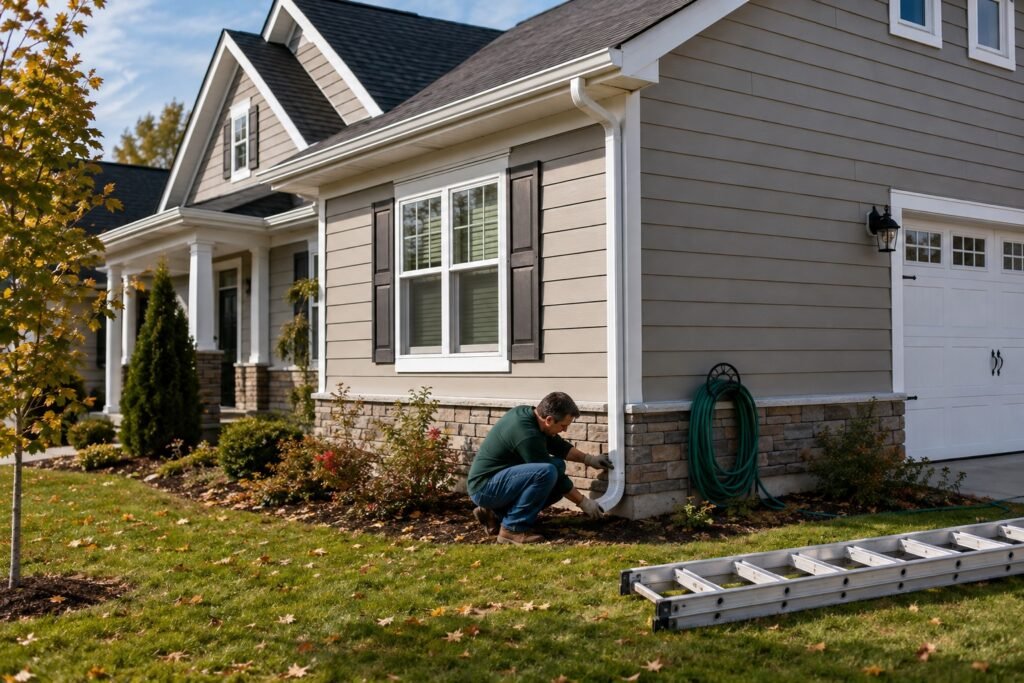
Clear accessible ground-level drainage paths and make sure downspouts direct water away from the building. Schedule professional gutter or roof work when height, power lines, steep ground, or damaged materials create fall risk. Check basement and crawl-space areas for moisture after rain without entering flooded or unsafe spaces.
Before cooling season:
- Check filters, supply registers, and return grilles.
- Remove leaves or loose debris around the outdoor unit without bending fins or opening equipment.
- Observe the condensate drain during normal operation.
- Schedule professional service when the system has unusual noise, odor, weak airflow, leaking refrigerant, repeated shutdowns, or electrical problems.
The Department of Energy advises routine filter care and professional help for maintenance beyond basic homeowner tasks. Keep vegetation and stored objects from blocking airflow around outdoor equipment.
Summer: manage cooling, storms, humidity, and outdoor water
In hot or humid regions, watch indoor humidity and condensation. Bathroom and kitchen exhaust should discharge as designed, not into an attic. Investigate sweating pipes, wet supply boots, recurring window condensation, and musty closets. The EPA advises keeping indoor humidity below 60 percent when possible, ideally within roughly 30–50 percent.
Review the home’s storm plan before severe weather arrives. Bring in or secure loose outdoor objects when advised, keep drains clear, charge necessary devices, and follow local emergency alerts. Do not use a portable generator indoors, in a garage, or close to openings; carbon monoxide can be fatal. Follow the generator manufacturer’s placement instructions and current CPSC safety guidance.
In dry or wildfire-prone areas, follow local defensible-space and vegetation rules rather than relying on generic landscaping advice. Clean dry debris from safe, accessible areas, keep address markings visible, and know how local authorities communicate evacuation information. Do not improvise roof work during extreme heat or smoke.
Where irrigation is used, inspect it while operating. Correct spray hitting walls, windows, or the foundation. A greener strip, soft soil, or unusually high water use can signal a leak. Confirm local watering restrictions before changing a schedule.
Fall: prepare the building envelope and heating system
Fall is a good time to examine door sweeps, weatherstripping, and appropriate sealant joints. Air sealing can improve comfort, but do not seal combustion-air openings, drainage gaps, weep holes, or ventilation paths without understanding their purpose. A professional energy assessment can identify priorities more reliably than sealing every visible opening.
Schedule heating service before the first severe cold, particularly for fuel-burning systems. Confirm that vents and registers are not blocked. Replace or clean filters as specified. Test alarms and review carbon-monoxide safety with the household.
Disconnect and drain exterior hoses where freezing is expected, then follow the plumbing design and local guidance for exterior faucets and irrigation. Insulation alone does not fix a leak or guarantee freeze protection. Know the main water shutoff using our utility shutoff guide.
Clean leaves from ground drains and arrange safe gutter service where needed. Check steps, handrails, exterior lighting, and walking surfaces before shorter days and freezing weather.
Winter: watch heat, water, ice, and indoor air
During cold weather, notice rooms that cannot maintain temperature, pipes in vulnerable areas, ice accumulation, roof leaks, and repeated condensation. Do not use an oven, charcoal grill, or outdoor heater to heat living space. Keep portable heaters away from combustibles and use them only as the manufacturer directs.
After snow or freezing rain, observe roofs and drainage from the ground. Do not climb onto an icy roof. Keep exterior exhaust outlets safely clear where the equipment manufacturer or local guidance requires it, but never approach dangerous snow loads, damaged utilities, or unstable ice.
In warm-winter climates, “winter maintenance” may instead mean the mild season for exterior painting, roof inspection, air sealing, or landscaping. Use weather conditions—not the calendar name—to decide when materials can cure and people can work safely.
Adjust the calendar by U.S. climate
Cold and very cold regions
Prioritize freeze protection, heating reliability, safe snow and ice management, weatherstripping, and spring checks for winter damage. Plans should account for local frost depth and ice-dam risk.
Hot-humid regions
Prioritize moisture control, cooling condensate, roof and flashing condition, termite or pest monitoring, and severe-storm preparation. Avoid creating vapor or ventilation problems with uninformed sealing work.
Hot-dry regions
Prioritize cooling equipment, roof and sealant exposure, irrigation leaks, shade, dust, and local water rules. Evaporative cooling equipment has different maintenance needs from conventional air conditioning.
Marine and rainy regions
Prioritize roof drainage, exterior coatings, foundation water, ventilation, and vegetation contact. Persistent dampness matters even when rainfall is not dramatic.
Coastal and high-wind regions
Prioritize corrosion, wind-rated components, shutters or opening protection where applicable, drainage, insurance documentation, and official storm guidance.
Create a schedule for your actual house
List each major system, its manual, installation or replacement date, warranty, last service, and next check. Then add local events: first freeze, rainy season, hurricane season, wildfire season, peak heat, or seasonal vacancy. A condo, manufactured home, historic house, and new suburban home will not share the same responsibilities.
Start with the first 30-day home checklist, then keep this calendar in the same maintenance file. When a task becomes more than observation or simple care, use the DIY-or-professional decision guide before beginning.