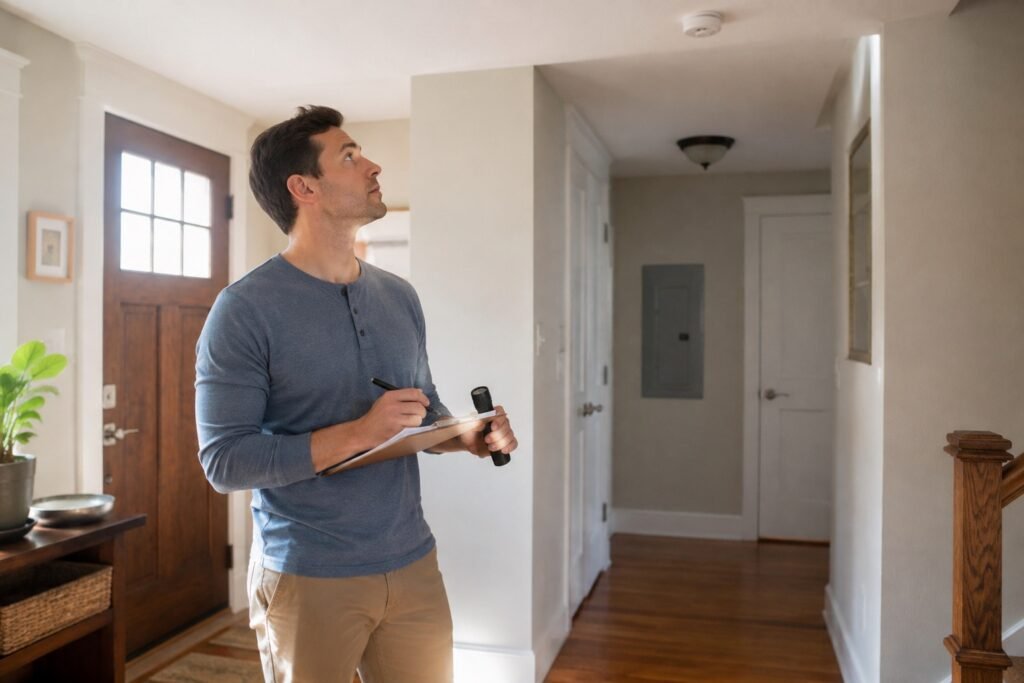
Moving into a home in the United States can feel like learning a new language. The building may have equipment you have never used, local weather may be unfamiliar, and words such as breaker panel, HOA, sump pump, or GFCI outlet may appear in inspection reports and service calls. The best first month is not about rushing into decoration. It is about learning how the home works, recording its condition, and dealing with small safety or moisture problems before they become expensive.
This 30-day plan is designed for a new homeowner, renter, or international newcomer. If you rent, document concerns and report repairs to the property owner or manager rather than altering building systems without permission. If you own, keep the inspection report, closing documents, warranties, and receipts together as the beginning of the home’s maintenance record.
Day 1: Learn the safety basics
Start with the things that matter during an emergency. Walk through every level and locate smoke and carbon-monoxide alarms. The U.S. Consumer Product Safety Commission recommends smoke alarms on every level, outside sleeping areas, and inside each bedroom; it recommends carbon-monoxide alarms on each level and outside sleeping areas. Test the alarms using the manufacturer’s test button and note their replacement dates. Do not paint over them or assume that a light means the sensing element is still within its service life.
Identify two practical exit routes from sleeping areas and decide on a meeting point outside. Confirm that exterior doors and windows used for escape open without unusual force. If the home has security bars, learn how their emergency releases work. Keep exits clear rather than using hallways or stairs for storage.
Next, locate the main water shutoff, electrical service panel, and—if the property has natural gas—the utility meter and emergency contact number. The goal today is identification, not experimentation. Do not remove an electrical panel cover, force a corroded valve, or turn off gas simply to test it. Our guide to finding and documenting utility shutoffs explains how to build a safe household map.
Days 2–3: Photograph the home’s starting condition
Create a dated room-by-room record. Photograph floors, walls, ceilings, windows, appliances supplied with the home, exterior elevations, attic or basement areas that are safely accessible, and existing damage. Renters should send significant move-in defects through the landlord’s official reporting channel. Owners can use the record to track whether a crack, stain, or gap changes over time.
Look for active warning signs rather than judging cosmetic imperfections:
- Water stains that feel damp, bubbling paint, swollen cabinet panels, or musty odors
- Loose stair rails, missing guards, broken locks, or windows that will not close
- Warm outlets, repeated breaker trips, scorch marks, or buzzing electrical equipment
- Gas odor, soot around fuel-burning equipment, or a carbon-monoxide alarm
- Roof or foundation water entering during rain
Leave immediately and contact emergency services or the utility when there is a suspected gas leak, fire, carbon-monoxide event, or other immediate danger. A blog or online video is not a substitute for emergency guidance.
Days 4–7: Find water before water finds you
Many costly home problems begin as a slow leak. Use a flashlight to inspect under sinks, around toilets, behind an accessible washing machine, near the water heater, below the dishwasher area, and around the visible parts of supply and drain pipes. Do not touch damaged wiring or reach into standing water near electrical equipment.
Record the water meter reading when no fixtures are intentionally running, then check it again after a quiet period if your utility and meter type make that practical. Unexpected movement does not prove where a leak is, but it is a reason to investigate. Learn the normal sounds of the plumbing so continuous running or cycling becomes easier to notice.
The Environmental Protection Agency emphasizes that moisture control is the key to mold control and advises drying wet materials within 24–48 hours where possible. Our water-damage and mold prevention guide covers the first response to a leak and the point at which professional help is appropriate.
Week 2: Understand heating, cooling, and indoor air
Identify the type of heating and cooling system: central air conditioner, furnace, heat pump, boiler, window units, or a combination. Photograph equipment labels for your private maintenance file, but avoid publishing serial numbers. Locate the thermostat, filter position, condensate drain, outdoor unit, and service switches without opening sealed or energized compartments.
Check the filter size and installation direction printed on the existing filter. Replace or clean it according to the equipment and filter manufacturer’s instructions—not according to a universal schedule. Homes with pets, construction dust, wildfire smoke, or heavy system use may need more frequent checks. The U.S. Department of Energy notes that dirty filters restrict airflow and that routine filter care supports cooling efficiency.
Notice comfort differences between rooms, unusual odors, rattles, short cycling, or water around equipment. These observations help a technician diagnose a problem. Refrigerant, combustion, internal electrical, and major airflow work should be handled by trained professionals.
Week 3: Review the exterior and drainage
Walk around the property during dry weather and again after rain if it is safe. Look from the ground—do not climb onto the roof. Check whether downspouts discharge away from the foundation, soil appears to slope toward the house, exterior faucets drip, siding has open joints, or vegetation touches the roof and walls. Binoculars or a camera zoom can help you observe roofing from the ground.
Drainage priorities change by climate. A home in coastal Florida faces different rain, wind, and humidity conditions from a home in Minnesota, Arizona, or the Pacific Northwest. Use our seasonal U.S. maintenance calendar as a starting point, then adapt it to local freeze dates, storms, wildfire exposure, humidity, and water restrictions.
Week 4: Turn observations into a realistic plan
Divide your list into four groups:
- Emergency: active fire, gas, carbon-monoxide, structural-collapse, or severe electrical hazards.
- Urgent: active leaks, failed locks, unsafe railings, sewage, roof openings, or equipment faults likely to cause damage.
- Preventive: filter care, drainage correction, sealing appropriate air leaks, appliance maintenance, and scheduled inspections.
- Cosmetic: paint colors, hardware, shelving, and decorative improvements.
This order protects the building and your budget. A beautiful room is not improved by painting over a leak or hiding a damaged outlet. Before choosing DIY work, use the DIY-or-professional decision guide. For contracted work, compare written scopes using our U.S. contractor hiring checklist, then build a preliminary budget with our 2026 renovation cost guide.
U.S. home terms worth learning
- Permit
- Formal authorization from a local building department for work that the jurisdiction regulates. Requirements vary by city and county.
- Licensed and insured
- Two separate checks. A license concerns legal authorization or qualification where required; insurance concerns financial protection for specified risks. Verify both independently.
- HOA
- A homeowners association that may impose community rules and approval procedures in addition to government requirements.
- GFCI
- A ground-fault circuit interrupter designed to reduce shock risk in specified locations. If one will not reset or repeatedly trips, investigate the cause rather than defeating it.
- Call before you dig
- A utility-location process used before excavation. In much of the United States, 811 connects users to the local notification system; confirm the rules and lead time for your state.
Build a home file you can actually use
Keep a simple digital folder and a physical backup with inspection reports, permits, service dates, paint and flooring details, warranties, contractor contracts, appliance manuals, utility contacts, and photos of shutoff locations. Store sensitive account numbers and access codes securely, not in a folder shared with contractors.
At the end of 30 days, you do not need to know how to repair everything. You need to know what the house contains, what appears normal, who to call, and which work deserves priority. That knowledge is one of the most valuable improvements you can make.